From Miami to Leonida: How Rockstar Turns Florida into GTA 6
Leonida is not simply Miami with different street signs. Rockstar’s official setting and its developers’ interviews describe a process of selection: neighbourhoods, clothing, music, wetlands and local stories are reassembled around a crime narrative. Understanding that process explains more about GTA 6 than matching every tower to a real address. This feature examines the documented production choices, then separates those choices from our interpretation of the world they may create.

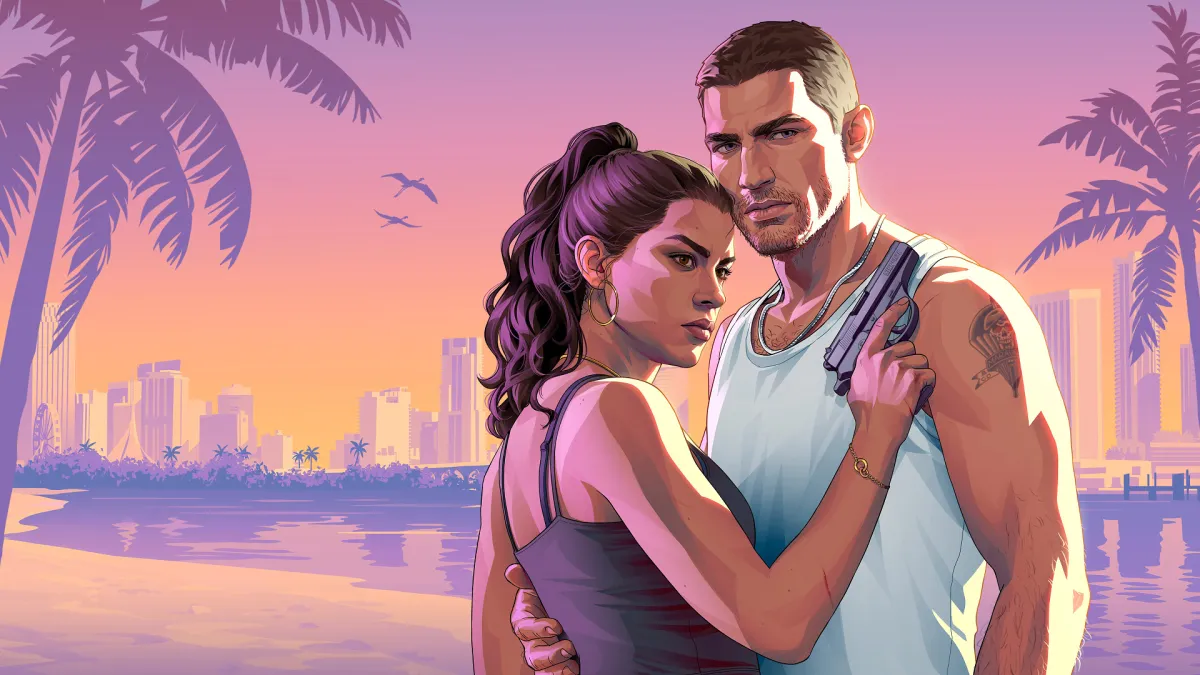
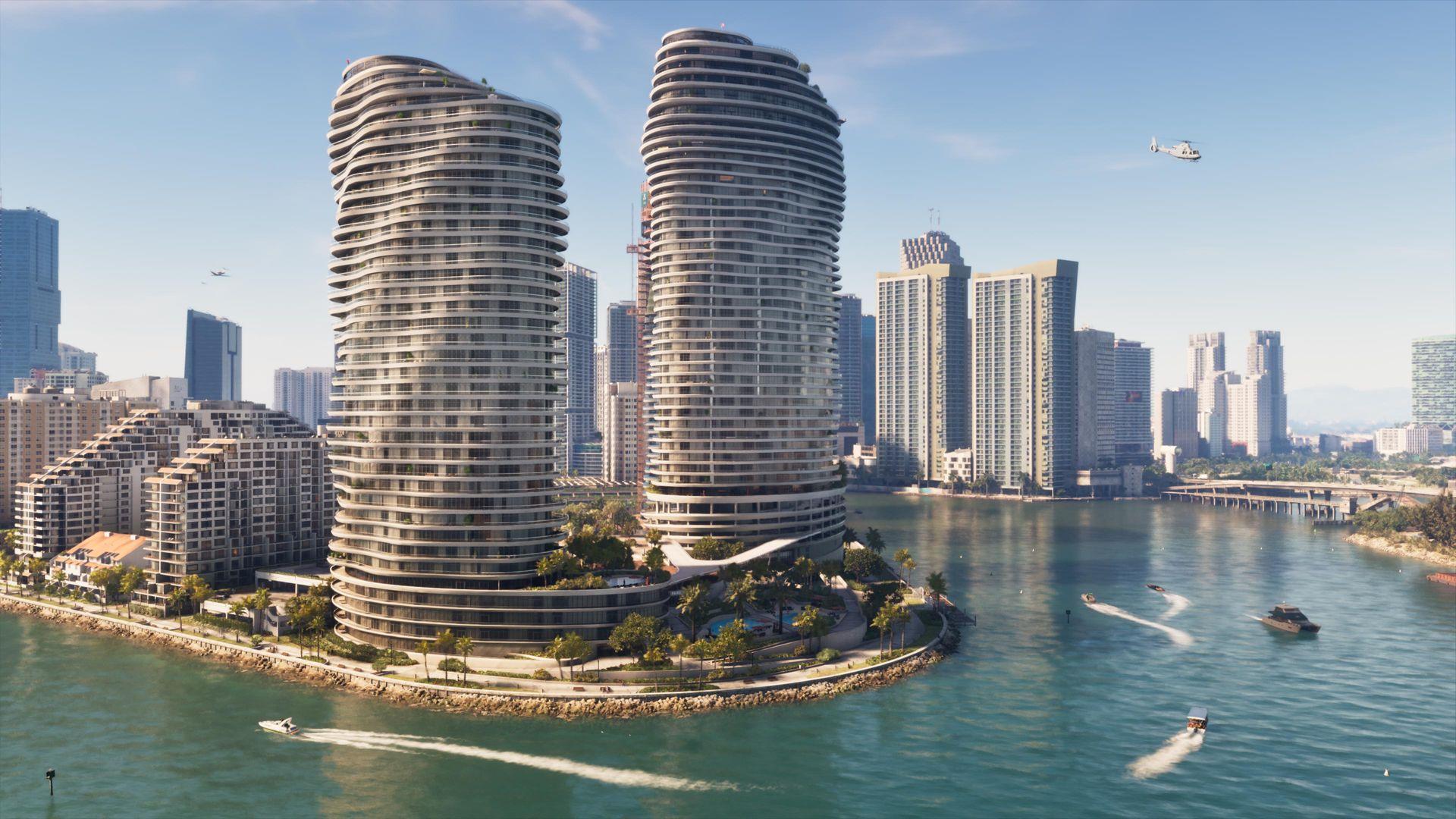
The city is introduced as a destination and a brand. The image does not locate a real Miami landmark. · View original source ↗
Research before parody
Dazed’s September 6 feature offers the strongest account of the cultural work behind the setting. Writer Michael Wiafe describes approaching Florida with curiosity rather than simply collecting its strangest stereotypes. Narrative executive Rupert Humphries describes meeting former criminals, law-enforcement personnel, club promoters and gun dealers, then cross-checking stories against books and journalism. These are named accounts of research, not a claim that every encounter became a mission.
That distinction changes how we should read the finished fiction. A character can combine several observations, and a district can compress different places into a legible route. Authenticity here means a convincing relationship between people, work, tastes and surroundings. It need not mean a faithful street grid. Our analysis is that Rockstar is pursuing recognisable social detail while preserving the freedom to rearrange it for narrative and play.
Sources: Dazed — interviews with Rockstar
Vice City is more than a beachfront postcard
Rockstar’s Only in Leonida page describes Ocean Beach’s pastel Art Deco hotels, Little Cuba’s bakeries, the Tisha-Wocka flea market and the cruise port. The important point is the contrast between these places. Tourism, local commerce and global transport coexist in the same fictional city. A player moving between them should encounter different visual languages rather than one uninterrupted strip of luxury hotels.
The description is first-party evidence for the places and atmosphere Rockstar is advertising. It is not a list of accessible interiors, shops where transactions are possible, or fully simulated industries. A port can help explain a city’s character without making every container interactive. For readers comparing Leonida to Miami, the useful question is what role a location serves in the fiction before trying to assign it an exact real-world address.
Sources: Rockstar — Only in Leonida
Street art: a specific collaboration, not a texture count
Dazed reports that more than 50 street artists contributed murals, including work for Stockyard, a district influenced by Miami’s Wynwood. This is unusually concrete production evidence: the report identifies both a group of contributors and a cultural reference. It supports a story about artistic collaboration, not an estimate of how many unique murals players will find or whether every one can be photographed for a reward.
Analysis: bringing different artists into the process can introduce differences in line, scale and voice that a single generic graffiti treatment would struggle to reproduce. The value is not simply additional detail. Murals can make a neighbourhood seem inhabited by people with competing identities. We would still need credits and the released game to connect individual artists to particular walls, or to judge how consistently the collaboration appears across Leonida.
Sources: Dazed — interviews with Rockstar
Clothes are part of the city’s social geography
Miami stylist Jillian Carr tells Dazed she has worked with Rockstar since 2023 on an in-game fashion ecosystem. Her account links clothing to taste, lifestyle, wealth and individuality. Senior art director Jamie-Lee Lloyd describes new tools for a more varied population, but also emphasises movement, interaction and expression. The developers’ argument is that a believable pedestrian needs more than a distinctive outfit.
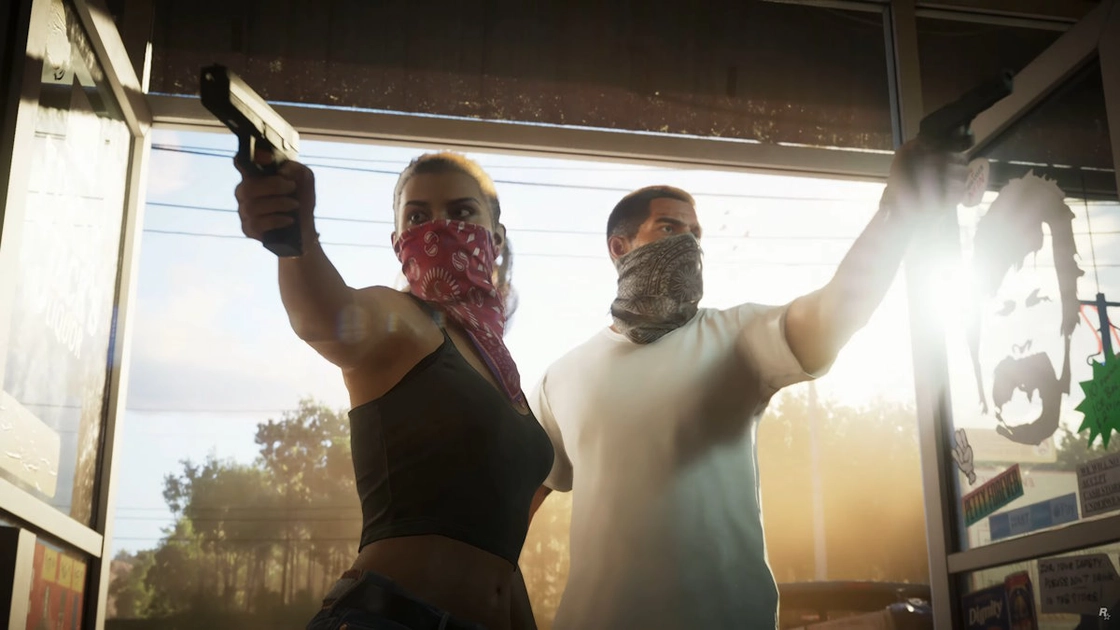
This suggests a useful way of looking at promotional images: compare dress, posture and surroundings together. The Grassrivers screenshot below shows mud, outdoor equipment, an airboat and visibly weathered clothing as one composition. Those elements establish a visual identity. They do not reveal an NPC’s occupation, prove that clothing affects police detection, or authenticate any specific real person as the character’s model.

Visual reading: clothing, mud and equipment communicate a regional identity. This posed promotional scene does not demonstrate autonomous behaviour. · View original source ↗
Sources: Dazed — interviews with Rockstar · Rockstar — official screenshots
Beyond Miami: wetlands are not empty space
The National Park Service describes the real Everglades through water, habitat differences, migratory birds and the interaction of tropical and temperate conditions. Even small changes in elevation matter in that landscape. That provides a better real-world reference than treating all wetlands as a homogeneous swamp. It explains why vegetation, water depth, sound and sightlines can create meaningful variety without a dense skyline.
Grassrivers belongs to a fictional game, not a National Park Service reconstruction. We cannot use real Everglades ecology to infer GTA 6 species counts, animal migration or seasonal water simulation. The connection is contextual: Florida offers visually and culturally distinctive environments beyond the tourist coast. Whether those environments produce varied decisions for players is a separate design question, addressed in our living-world feature.
Sources: National Park Service — Everglades nature · Rockstar — official screenshots
A practical guide to reading the references
The table separates documented connections from comparisons that are useful only as context. A source confirming an influence is stronger than a fan placing two similar photographs side by side. Neither kind of resemblance establishes distances, property names or private ownership in the game. This matters particularly when online theories draw real businesses or residents into speculative stories about fictional locations.
It also prevents a subtler mistake: assuming that visual authenticity makes the satire neutral. Rockstar chooses what to exaggerate and whom to place in the foreground. Those are artistic decisions readers can question. We can recognise the labour behind the setting while reserving judgement about whether the resulting portrayal gives its communities depth or reduces them to familiar jokes.
| Reference | What the evidence supports | What it does not establish |
|---|---|---|
| Miami / Vice City | Developer interviews and Rockstar location copy | A street-for-street recreation |
| Wynwood / Stockyard | Dazed identifies the influence and artist collaboration | A complete mural catalogue |
| Fashion / local identity | Carr describes a researched clothing ecosystem | A social-status gameplay algorithm |
| Everglades / wetland context | NPS explains real ecological variety | Equivalent GTA 6 ecology |
Sources: Rockstar — Only in Leonida · Dazed — interviews with Rockstar · National Park Service — Everglades nature
The question to take into the next reveal
Game Informer’s September 25 announcement promises interviews on research, wildlife and weather in a digital issue due September 29. It is a relevant next source because it may connect the production process to more specific environmental systems. As of this September 28 review, we have read the announcement, not the unreleased issue. Its promised detail should not be backfilled with assumptions about storms or animal behaviour.
The strongest conclusion already available is that Leonida is being built through observation and specialist contributions, not through geography alone. The next test is whether those contributions remain connected when the player moves through the world: does a neighbourhood’s clothing, music, architecture and daily life tell a coherent story? That is a more useful measure of place than counting how many Miami landmarks have a fictional counterpart.
Sources: Game Informer — GTA VI cover announcement · Dazed — interviews with Rockstar
Evidence timeline
Fashion collaboration begins
Carr dates her work with Rockstar to 2023 in Dazed’s interview.
Dazed documents the research
Named developers and contributors describe fieldwork, murals and fashion.
Game Informer announces its cover
Research, wildlife and weather are promised for the September 29 digital issue.
Continue reading
Related GTA 6 coverage
Game Informer reveals GTA 6 cover story with 12 new screenshots and Rockstar interviews
Game Informer · 2026-09-25
Inside Rockstar's Miami research: 50 street artists, local fashion and race drivers shaping GTA 6
Dazed — direct interviews with Rockstar Games · 2026-09-19
GTA 6’s ‘Welcome to Vice City’ sign is now installed on Miami’s Kaseya Center
WPLG Local 10 · 2026-09-18

GTA 6 is Causing PROBLEMS in Miami…
TGG · 2026-09-09
Miami’s GTA 6 banner proposal: $208,000 fee, dates and approval status explained
City of Miami — Legislative Portal · 2026-09-04
Miami-Dade Officials Are Fighting the GTA 6 Vice City Marketing Deal
GTA BOOM · 2026-09-04